
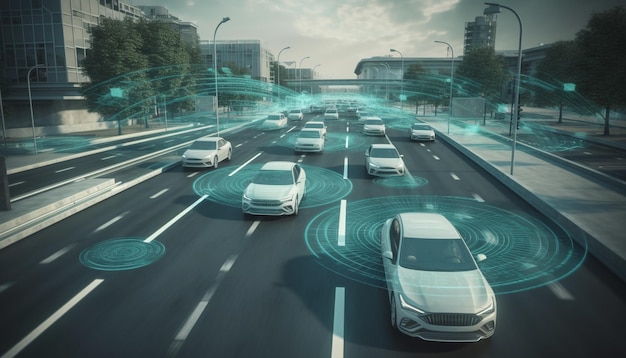
The road to fully autonomous vehicles is unfolding at a remarkable pace, and the future of self-driving cars is one that promises to reshape the way we think about transportation. As technology advances and regulations adapt, the self driving evolution is becoming more tangible than ever. What was once confined to the realm of science fiction is now quickly approaching reality, with industry leaders pushing the boundaries of what’s possible. But what does the future truly hold for self-driving cars? Let’s explore some autonomous future insights and what they could mean for society.
The Rise of Next Gen Automation
When we talk about the future of self-driving cars, the most exciting aspect is the next gen automation that is set to revolutionize how we travel. The transition from manual to fully autonomous driving will not only improve convenience but also increase safety and efficiency on the roads. Early models of self-driving cars may still require human intervention, but future iterations will likely operate with minimal to no human input, relying on advanced sensors, artificial intelligence (AI), and real-time data.
The current generation of autonomous vehicles is already capable of navigating city streets and highways, avoiding obstacles, and making decisions in complex traffic situations. However, the real breakthroughs will come when these vehicles can adapt to unpredictable environments, like inclement weather, road construction, and human drivers who are often unpredictable. These futuristic auto technologies will make self-driving cars safer, more efficient, and increasingly reliable.
Enhanced Safety and Efficiency
One of the key promises of the self driving evolution is the potential for drastically improved road safety. Human error is the leading cause of car accidents, but self-driving cars equipped with cutting-edge sensors and AI have the potential to eliminate these accidents. With the ability to instantly react to hazards, track traffic conditions, and make split-second decisions, autonomous vehicles could significantly reduce accidents and save countless lives.
Additionally, futuristic auto technology will enable more efficient driving patterns. Autonomous cars will be able to communicate with each other, optimizing traffic flow and reducing congestion. This could not only improve fuel efficiency but also lower the carbon footprint of transportation, making it more environmentally friendly. It’s a glimpse into a future where self-driving cars are not just convenient but also sustainable and eco-conscious.
Changes in Transportation Systems
The impact of autonomous cars goes beyond just the vehicles themselves. Self-driving cars are likely to lead to a complete transformation of transportation systems. Imagine a world where you no longer need to own a car to get around. Ride-sharing services using fleets of autonomous vehicles could offer on-demand transportation, reducing the need for personal car ownership. This would have far-reaching implications for urban planning, reducing the number of cars on the road, and minimizing the need for parking spaces in crowded cities.
The idea of next gen automation also extends to how we think about travel. Self-driving cars could revolutionize long-distance travel by providing passengers with the ability to work, relax, or even sleep during their journey. Instead of focusing on the road, passengers could engage in a wide range of activities, increasing the productivity and overall experience of travel.
Legal and Ethical Challenges
As self-driving cars become more widespread, there will be significant legal and ethical considerations to address. Questions about liability, insurance, and accountability will need to be answered as autonomous vehicles take on more responsibility in driving. There will also be the challenge of ensuring that the technology is safe and accessible for everyone. Governments, automakers, and tech companies will need to collaborate on developing a framework that guarantees public trust and safety.
Moreover, the ethics of autonomous driving decisions—such as how an AI should respond in an emergency situation—will spark debates on moral responsibility and decision-making. While these challenges are complex, they are not insurmountable, and the future will likely involve ongoing discussions and advancements to address these issues.
The self driving evolution is accelerating, and with it comes the promise of a future where transportation is safer, more efficient, and more sustainable. From the development of next gen automation to the integration of futuristic auto technology, autonomous cars are poised to change the way we live, work, and travel. While challenges remain, the path forward is clear: self-driving cars will soon become an integral part of our daily lives, reshaping the future of mobility. The road ahead is filled with excitement and opportunity, making the future of self-driving cars one to look forward to with anticipation.


